
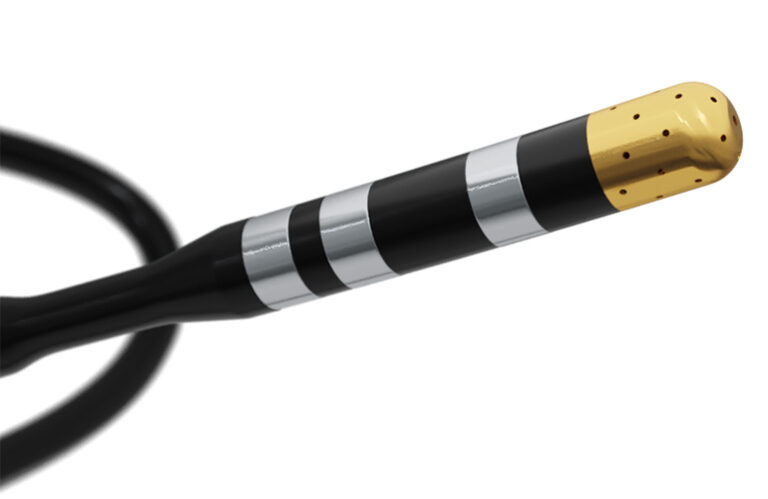

Stereotaxis, a pioneer in robotic magnetic navigation (RMN) systems, is reshaping how precision and control are achieved in minimally invasive procedures. Through innovations like its MAGiC (magnetic interventional ablation catheter)and EMAGIN (endovascular magnetic intervention) catheter platforms, the company is pushing the boundaries of how magnetics can redefine safety, accuracy, and patient outcomes in interventional medicine.
Following the introduction of its MAGiC Sweep cardiac mapping catheter, the first-of-its-kind device designed for robotic navigation and enhanced electro-anatomic mapping, Stereotaxis CEO and Chair David Fischel shared new insights on how magnetic technology is transforming medical procedures — and where the future of this field is heading.
At the heart of Stereotaxis’ innovation is the concept of magnetic precision. Traditional catheters rely on manual or wire-based manipulation, which can be physically demanding for operators and risky for patients due to the stiffness required for navigation through complex anatomy. By contrast, Stereotaxis’ RMN system replaces manual steering with computer-controlled external magnetic fields, allowing soft, flexible catheters to move with millimeter-scale accuracy and minimal force.
“Magnetic control provides precision with greater gentleness,” said Fischel. “The tip is guided by very precise computer-controlled external magnetic fields. This enables smooth, millimeter-scale steering and stable tissue contact even in complex anatomy, typically with lower contact force than stiff manual catheters. Operators benefit from the precision, reduced strain, and radiation exposure enabled by remote navigation.”
This technology offers tangible advantages not only in accuracy but also in operator safety. Interventional cardiologists and electrophysiologists face long hours of radiation exposure in cath labs. By introducing remote magnetic control, Stereotaxis allows physicians to navigate catheters from a protected control room — eliminating the need to wear heavy lead aprons and significantly reducing radiation exposure.
While Fischel acknowledges that RMN systems have traditionally faced limitations — such as requiring proprietary magnetic catheters instead of off-the-shelf wires — he emphasized that these challenges are being overcome. “These elements are increasingly being solved with the introduction of more catheters like MAGiC Sweep and the MAGiC ablation catheter,” he said.
Beyond precision and ergonomics, patient safety remains a cornerstone of Stereotaxis’ design philosophy. Traditional cardiac mapping procedures carry well-known risks, including cardiac or pericardial injury caused by stiff catheter tips and extended fluoroscopy times leading to radiation exposure. Magnetic catheters, however, are inherently soft and pliable, as they eliminate the need for rigid pull-wires. This makes them significantly safer in navigating delicate cardiac structures.
“Our RMN approach was purpose-built to mitigate several of these risks,” Fischel explained. “Magnetic catheters are inherently soft and flexible because they don’t rely on internal pull-wires or rigid plastic, which reduces the risk of traumatic tip–tissue interaction. Remote computer-guided navigation also supports precise, incremental movements that can lower fluoroscopy needs for the patient, physician, and healthcare staff.”
The MAGiC Sweep catheter further refines these safety benefits by introducing fine-tuned magnetic tip control that enhances electro-anatomic mapping efficiency. The catheter’s design supports high-resolution data capture, producing detailed three-dimensional maps of cardiac tissue while minimizing the number of physical contacts with heart walls. This design helps physicians complete mapping procedures faster, with greater accuracy, and with less trauma to the patient’s cardiac tissue.
Fischel also addressed a question that’s become increasingly relevant in electrophysiology: whether magnetic navigation is compatible with pulsed-field ablation (PFA), an emerging energy modality that uses electrical fields to ablate cardiac tissue without heat. He noted that Stereotaxis’ magnetic fields do not interfere with PFA energy delivery. In fact, the two technologies can work synergistically.
“There’s no conflict between using our magnetic fields for navigation and delivering PFA,” Fischel said. “On the contrary, there is actually strong clinical rationale to pairing robotic magnetic navigation and PFA. As we learn more about PFA it has been increasingly clear that consistent contact between the catheter electrode and heart tissue is critical for creating durable lesions and avoiding complications. Robotics improves upon manual catheters by improving tissue contact with more consistent, stable and safe forces.”
Stereotaxis’ preclinical testing over the past two years has reinforced this synergy, showing that robotic navigation can enhance the precision of PFA lesion creation while minimizing collateral tissue damage. The company now plans to advance its PFA integration efforts into clinical stages in the coming months — a step that could open new possibilities for the treatment of atrial fibrillation and other complex cardiac arrhythmias.
In addition to its ongoing work in electrophysiology, Stereotaxis is expanding magnetic navigation into broader interventional fields, including vascular and oncology applications. This expansion is being led by the EMAGIN platform, a family of robotically navigated endovascular guidecatheters and wires designed to traverse tortuous vasculature and reach previously inaccessible regions. The technology could help treat patients suffering from strokes, cardiovascular disease, and even cancer, extending the reach of robotic precision to new therapeutic frontiers.
“The first device, EMAGIN 5F, was submitted for FDA clearance as well as European CE mark earlier this year,” Fischel confirmed. This milestone reflects Stereotaxis’ goal of broadening the impact of magnetic navigation beyond electrophysiology and toward multi-specialty interventional medicine.
Stereotaxis’ vision for the future of medtech is built on three converging pillars: robotics, interventional devices, and digital technology. Each represents a core innovation area that, when combined, forms a connected ecosystem capable of transforming procedural medicine — not just for cardiac care, but for a wide range of minimally invasive interventions.
According to CEO David Fischel, Stereotaxis’ focus is not limited to the mechanics of magnetic navigation but extends into a broader effort to modernize the entire interventional workflow. “We have a robust innovation effort focused predominantly in three main areas: robotics, interventional devices, and digital technology,” he said. “Each of these three areas is highly exciting, and the combination and interplay of the three leads to an attractive technology ecosystem.”
At the core of this ecosystem is Stereotaxis’ Genesis X RMN system, the next-generation robotic magnetic navigation platform designed to steer catheters through intricate anatomy with unmatched precision. Using two powerful computer-controlled magnets positioned around the patient table, the system generates a dynamic magnetic field that gently directs the movement of a magnetically enabled catheter within the body. This allows physicians to navigate even the most tortuous pathways — in the heart, blood vessels, or other organs — with precise control that would be impossible to replicate manually.
The company’s research and development efforts are advancing rapidly on multiple fronts. In electrophysiology, Stereotaxis is building upon the success of its FDA-cleared MAGiC Sweep catheter and the upcoming MAGiC ablation catheter. Both are designed to improve mapping and ablation outcomes, leveraging magnetic steering to create smoother lesion formation and more efficient energy delivery. Behind these products is a pipeline of magnetically enabled devicesthat the company says will redefine the capabilities of robotic-assisted cardiac procedures.
Simultaneously, in endovascular navigation, Stereotaxis is pursuing new frontiers with its EMAGIN platform — a suite of robotically navigated guidecatheters and wires engineered to navigate the vascular system safely and efficiently. This initiative expands the clinical utility of RMN technology well beyond the heart. Fischel notes that EMAGIN’s precision could one day revolutionize stroke interventions, oncologic procedures, and complex cardiovascular therapies by providing physicians with better access to hard-to-reach regions while minimizing procedural risks.
“The EMAGIN family expands the clinical value of RMN into the broader endovascular field by helping physicians navigate tortuous vasculature and reach difficult anatomy to deliver therapy,” Fischel said. “This can have wide applications, from helping treat patients suffering from strokes, cardiovascular disease, and cancer.”
While the physical hardware of robotic systems defines one dimension of innovation, Stereotaxis’ digital strategyrepresents another equally critical frontier. The company is developing a digital infrastructure that integrates data collection, real-time imaging, and procedural analytics into a unified interface. This will allow clinicians to visualize magnetic catheter movement in 3D space, capture performance metrics, and utilize predictive modeling for improved decision-making.
Digital connectivity also enables the potential for remote procedural collaboration. With the integration of networked robotic systems, a specialist in one location could theoretically guide or assist in procedures across different hospitals or even continents. Such capabilities could help address geographic disparities in access to advanced cardiac care — particularly in regions lacking highly trained electrophysiologists.
In addition to advancing its technology stack, Stereotaxis remains deeply aligned with the broader trajectory of the medtech industry, which is increasingly driven by robotics, artificial intelligence, and data integration. Fischel described these trends as the foundation of a “cognitive shift” in medicine.
“When I look at the medtech field generally, and procedural medicine specifically, I see three major themes,” Fischel said. “First, the consistent drive towards less and less invasive procedures. Second, the rise of robotic-assisted surgery helping overcome the limitations of the human hand and making surgery increasingly a cognitive versus mechanical effort. Finally, the rise of digital solutions that allow physicians to benefit from insights, data, and connectivity.”
Stereotaxis’ strategic alignment with these trends places it at the intersection of engineering precision and digital intelligence. Its robotic systems already automate aspects of procedure setup and movement calibration, while data from its magnetic catheters can feed into digital twin models that simulate patient-specific anatomy and procedural pathways. The eventual goal is to achieve real-time adaptive control, where the robotic system can anticipate operator intent and adjust magnet vectors dynamically based on feedback from sensors in the catheter tip.
Fischel believes these innovations will fundamentally redefine the physician’s role in interventional procedures. “We view ourselves very much at the center of these three big trends as the leaders in robotics for minimally invasive cath lab procedures,” he said. “It’s an exciting time to be in the field. We still have much to offer in terms of technological improvements that benefit our patient, physician, provider, and payor stakeholders.”
Looking ahead, Stereotaxis plans to integrate artificial intelligence into its platform, using AI-driven navigation assistance to optimize catheter paths and predict ideal lesion placement based on patient anatomy. This would not only improve procedural efficiency but also reduce variability across operators — an important step toward standardizing outcomes in cardiac ablation and interventional procedures.
Beyond the cath lab, Stereotaxis is exploring collaborations across adjacent sectors in robotics and digital health to expand the ecosystem of magnetically navigated interventions. As the technology matures, it could eventually support applications in neurology, oncology, and precision drug delivery, leveraging magnetic control for therapies requiring targeted navigation within delicate tissue structures.
For now, the focus remains clear: advancing robotic magnetic navigation as a cornerstone of next-generation medicine. With its blend of mechanical precision, digital integration, and clinician-focused design, Stereotaxis is positioning itself not just as a device manufacturer but as a technology ecosystem leader — enabling safer, smarter, and more connected minimally invasive care.
Powered by Froala Editor