
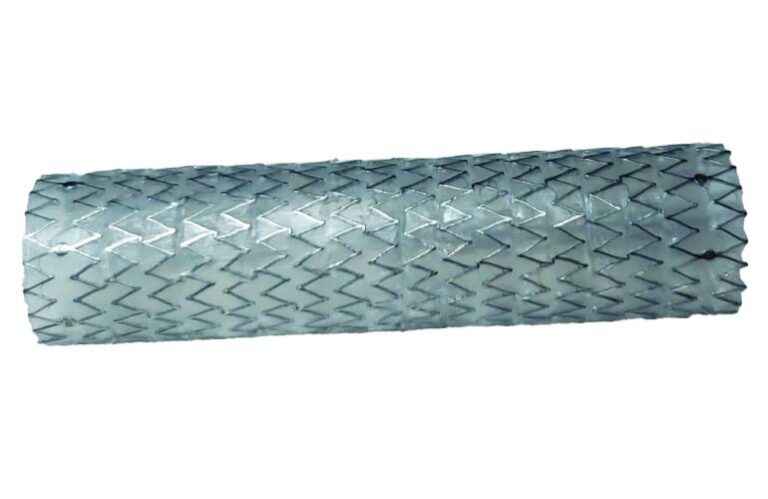

Peytant Solutions, a MedTech innovator based in Plymouth, Minnesota, has announced positive pre-clinical results for its AMStent tracheobronchial covered stent system, reinforcing its potential to reshape treatment for patients suffering from malignant airway obstructions. The findings were presented by Dr. Roy Joseph Cho of the University of Minnesota at the 2025 American Association for Bronchology and Interventional Pulmonology (AABIP) Annual Meeting.
According to the study, AMStent demonstrated superior outcomes compared to a commercially available synthetic polymer-covered stent, delivering improvements in airflow restoration, tissue integration, and long-term airway health.
Addressing malignant airway obstructions
Malignant tracheobronchial obstructions represent one of the most difficult complications for patients with advanced cancers. As tumors grow, they can narrow or block airflow in the trachea or bronchial passages, leading to significant respiratory distress, compromised quality of life, and limited treatment options.
Current palliative interventions often focus on restoring airflow through dilation and airway stent placement. However, conventional polymer-covered stents are associated with challenges such as mucus buildup, frequent migration, and inflammation, which can limit effectiveness and lead to complications.
Peytant designed AMStent to address these unmet needs directly. The device is intended for use in adult patients with tracheobronchial strictures caused by malignant neoplasms, providing a minimally invasive solution that improves both short- and long-term outcomes.
Amnion-based innovation
The AMStent represents the first commercial product from Peytant’s amnion-based covered stent platform. Unlike conventional polymer stents, AMStent incorporates a biological covering made from amnion, a naturally derived biomaterial with anti-inflammatory and healing properties.
The stent is delivered via a catheter-based system, ensuring minimally invasive placement. Once deployed, the amnion covering is designed to integrate with the surrounding airway tissue, promoting healing while minimizing complications such as mucus accumulation or migration.
Key study findings
The pre-clinical study compared AMStent against a synthetic polymer-covered control stent over a 90-day period in a porcine model. Results demonstrated several significant advantages:
Reduced mucus buildup: AMStent-treated airways showed cleaner lumens with improved airflow.
Rapid tissue integration: Evidence of integration was visible by day seven, with full integration achieved by day 90.
No stent migration: AMStent maintained stable positioning, while control stents showed frequent migration.
Improved epithelial restoration: AMStent-treated airways showed significantly less inflammation and re-established the normal epithelial structure and function.
Fewer complications: One-third of control stents became fully occluded with associated airway complications, while AMStent showed no such outcomes.
These findings highlight AMStent’s ability to not only restore airway patency but also maintain durability and safety over time, critical for improving patient quality of life in palliative care settings.
Regulatory progress and commercialization
The FDA granted de novo clearance for the AMStent system in October 2024, marking it as the first amnion-based covered stent available for tracheobronchial applications. With clearance secured, Peytant is preparing to commercially launch AMStent in the U.S. later in 2025.
The company also plans to expand research into additional luminal applications, leveraging its amnion-based platform across other areas such as:
Vascular stents
Gastrointestinal interventions
Neurological stenting
Urological procedures
This signals a long-term vision where amnion-based biomaterials could redefine stent technology across multiple specialties.
Leadership perspective
Peytant’s CEO and co-founder John Schorgl underscored the significance of the results and the company’s broader mission:
“We’re on a mission to fundamentally transform the treatment of luminal diseases using patented, foundational biomaterial technology. These results reinforce our belief that the AMStent system has the potential to set a new standard of care.”
A new standard in airway stenting?
If replicated in clinical use, AMStent could represent a major step forward in airway stent technology, offering oncologists and pulmonologists a solution that not only restores breathing but also integrates with the body more effectively than synthetic alternatives. For patients, this could mean fewer complications, greater comfort, and improved ability to undergo concurrent cancer therapies.
As Peytant prepares for commercial rollout, the AMStent platform has the potential to redefine expectations for stent performance, opening the door for broader biomaterial-based innovation across the MedTech industry.
Competitive dynamics: Peytant enters the airway stent market with AMStent
With its AMStent system, Peytant Solutions is entering a market long dominated by synthetic polymer stents. The company’s amnion-based innovation has the potential to reset benchmarks for safety, integration, and durability in tracheobronchial interventions. To understand the significance of AMStent, it’s important to examine the current competitive landscape, where major players like Boston Scientific, Merit Medical, and Micro-Tech Endoscopy have established portfolios but face limitations in addressing malignant airway obstruction.
The current standard: polymer- and metal-based stents
Airway stenting has historically relied on silicone or metal stents, some of which are covered with synthetic polymers to prevent tumor ingrowth. While effective in restoring airway patency, these devices often suffer from three persistent problems:
Mucus buildup – Synthetic materials can irritate the airway, increasing secretion accumulation.
Stent migration – Devices may shift, particularly in the presence of ongoing tumor growth or respiratory movement.
Inflammation and poor tissue compatibility – Synthetic coverings can provoke adverse reactions, compromising epithelial healing.
These limitations frequently result in repeat procedures, raising costs and reducing quality of life for patients who are already in fragile health.
Peytant’s competitive differentiator: amnion covering
Peytant’s AMStent differentiates itself by replacing synthetic coverings with amnion, a naturally derived material known for anti-inflammatory, anti-scarring, and pro-healing properties. This biomaterial innovation directly addresses the shortcomings of polymer-covered stents:
Reduced mucus buildup improves airflow consistency.
Tissue integration minimizes migration risk and ensures stability.
Lower inflammation promotes epithelial restoration, improving long-term airway health.
In pre-clinical data, AMStent demonstrated zero stent migration and full integration by 90 days, outcomes unmatched by traditional alternatives. If these findings hold true in broader clinical use, Peytant may redefine physician expectations for airway stenting.
Key competitors
Boston Scientific – A global leader in interventional pulmonology, offering Ultraflex and Aero stents, widely used but based on conventional silicone and polymer technologies.
Merit Medical – Manufactures the Endotek stent line, including fully covered, partially covered, and uncovered variants. Merit focuses on providing a wide range of options but remains limited by synthetic materials.
Micro-Tech Endoscopy – Strong in self-expanding metal stents, particularly in Asia and Europe, with global reach expanding into the U.S.
These players control the majority of the airway stent market today. However, none currently offers a biomaterial-based platform comparable to AMStent, giving Peytant a first-mover advantage in the shift toward biologically compatible stent coverings.
Market opportunity
The global airway stent market is projected to reach $200–250 million by 2030, driven by rising lung cancer incidence and demand for palliative care solutions. Within this market, Peytant is targeting a subsegment with high unmet need—malignant airway obstructions. Roughly 20–30% of patients with advanced lung cancer develop airway compromise, underscoring the scale of the opportunity.
If AMStent reduces complications and repeat interventions, hospitals and payors could see meaningful cost savings, enhancing the case for adoption. In a value-driven healthcare environment, this combination of improved patient outcomes and economic efficiency may accelerate market penetration.
Expansion into multi-specialty luminal applications
Peytant’s ambitions go beyond pulmonology. The company has signaled plans to expand its amnion-based platform into other luminal applications, including:
Vascular interventions – Offering an alternative to polymer- or ePTFE-covered stents.
Gastrointestinal (GI) stents – Where migration and inflammation remain common complications.
Neurological stents – Addressing delicate vessel environments that require biocompatibility.
Urological stents – Reducing biofilm buildup and infections in long-term placements.
By proving efficacy in tracheobronchial applications first, Peytant is building the foundation for a multi-specialty biomaterial stent portfolio that could challenge incumbents across multiple high-value markets.
Challenges to overcome
Despite its promise, Peytant must address several hurdles:
Clinical validation – Real-world outcomes in diverse patient populations must confirm pre-clinical findings.
Physician adoption – Pulmonologists accustomed to silicone or metal stents will require training and long-term data to switch practices.
Commercial scale – Competing against multinationals like Boston Scientific and Merit will require strong distribution partnerships and marketing.
Regulatory pathways – Expansion into vascular, GI, or neurological markets will necessitate new regulatory submissions and trials.
Strategic outlook
With FDA de novo clearance secured in late 2024 and U.S. commercial launch planned for 2025, Peytant enters the market at a strategically favorable moment. The company can position AMStent not just as another airway stent but as a paradigm shift toward biomaterial-based luminal therapies.
If Peytant succeeds in differentiating AMStent clinically and commercially, it could establish itself as a disruptive force in interventional pulmonology and lay the groundwork for expansion into adjacent specialties. In doing so, it may challenge entrenched competitors while raising the standard of care for patients suffering from malignant airway obstructions.
Powered by Froala Editor