

Researchers are exploring the potential of low-intensity focused ultrasound (LIFU) as a noninvasive technique to break apart amyloid fibrinogen microclots — stubborn protein clots that have been linked to long COVID and other chronic inflammatory diseases. The findings, based on new preclinical research, highlight how precisely controlled sound waves could offer a safer and more effective alternative to current clot-disruption methods, many of which carry significant risks.
For millions suffering from long COVID, symptoms such as chronic fatigue, cognitive impairment (“brain fog”), and shortness of breath can persist for months or even years after initial infection. One leading hypothesis points to the formation of microscopic amyloid fibrinogen clots that impede blood flow and fuel inflammation throughout the body. These microclots, composed of misfolded protein structures, have proven resistant to conventional clot-dissolving treatments such as recombinant tissue plasminogen activators (rtPA) and filtration procedures, both of which can have dangerous side effects.
In this new preclinical study, researchers tested whether focused, low-frequency ultrasound energy could effectively disrupt these amyloid fibrinogen microclots. Using carefully calibrated frequency ranges, the team found that LIFU successfully fragmented the clots in laboratory conditions, suggesting the potential for a noninvasive and targeted treatment pathway for long COVID and other diseases associated with microclot formation.
Therapeutic ultrasound is not new to medicine. It’s already used clinically for breaking down larger clots, such as those formed during stroke or deep vein thrombosis (DVT), often in combination with clot-busting drugs like rtPA. In previous clinical trials, combining ultrasound with rtPA restored blood flow within two hours in 25% of stroke patients, compared to only 8% among those treated with drugs alone. Similar results have been observed in DVT cases, where ultrasound-assisted therapy achieved complete clot clearance in up to 70% of patients across multiple centers.
However, amyloid microclots are different in both composition and behavior. Unlike standard fibrin clots, which can be enzymatically broken down, amyloid fibrinogen clots form a denser, more rigid protein matrix that resists degradation. This resilience means that conventional therapies, while effective for typical blood clots, fail to dissolve these microscopic formations. Filtration-based treatments can physically remove them but are invasive, costly, and carry a risk of bleeding or infection.
That’s where low-intensity focused ultrasound could offer a breakthrough. Unlike diagnostic ultrasound, which merely images tissue, LIFU uses precisely focused acoustic energy to create mechanical effects at specific locations inside the body. These effects include cavitation, in which microscopic gas bubbles form and collapse, generating localized forces strong enough to break down dense material without damaging surrounding tissue.
The researchers conducted their experiments using the Open-LIFU system, developed by the neuroimaging and medical technology company Openwater. To simulate biological conditions, they engineered artificial amyloid microclots from porcine plasma and placed them within a microfluidic “lab-on-chip” device designed to mimic a 6 mm-diameter vein, similar to a deep leg (popliteal) vessel. The setup was immersed in an acoustic water bath, where it could be precisely exposed to various ultrasound frequencies — specifically 150, 300, 500 kHz, and 1 MHz — under controlled laboratory conditions.
Each frequency was tested in four configurations:
Ultrasound alone,
Ultrasound with microbubbles,
Ultrasound combined with rtPA, and
Ultrasound combined with both microbubbles and rtPA.
Among the tested conditions, the 150 kHz frequency produced the most significant clot fragmentation. When microbubbles were added, the disruption was amplified — reducing both the number and size of the clots substantially. In the most effective combination, using ultrasound with both microbubbles and rtPA, the number of clots fell from approximately 500 to about 50, while the average clot diameter shrank from 19 micrometers to just 7.
Researchers believe the microbubbles enhance the process by generating microcurrents during cavitation, which mechanically shear the clots and expose more surface area for rtPA to bind and act upon. This dual mechanical and enzymatic process creates a synergistic effect that significantly increases clot breakdown efficiency while reducing the need for high drug concentrations.
Importantly, these findings were achieved in a controlled in-vitro (laboratory) model, not in live subjects. While the data are preliminary, they provide compelling proof-of-concept that low-frequency, low-intensity ultrasound can safely and effectively fragment microclots that have resisted other forms of therapy.
The results also illustrate the broader potential of repurposing existing medical technologies. Ultrasound has long been regarded as a safe, noninvasive modality; adapting it for microvascular applications like this could expand its role in treating a range of chronic, inflammation-driven diseases, from long COVID and fibromyalgia to chronic fatigue syndrome and vascular dementia — all of which have been associated with microclot formation.
According to Openwater CEO Aaron Timm, the company’s work demonstrates how combining advanced imaging and therapeutic ultrasound can yield new solutions for persistent conditions that conventional medicine has struggled to address. “Our goal is to leverage sound and light technologies to give clinicians new tools for both diagnosis and treatment — without surgery or systemic drugs,” Timm said in a statement accompanying the study.
For long COVID patients, this research offers a new sense of hope. By using precision sound waves to mechanically target microclots rather than relying solely on drugs that alter the body’s clotting chemistry, clinicians could one day have a safer and more controlled therapy to restore circulation and reduce inflammation.
The preclinical results from the low-intensity focused ultrasound (LIFU) study mark an early yet significant step toward developing a noninvasive therapy for long COVID and other disorders involving amyloid fibrinogen microclots. While the laboratory findings demonstrate that sound waves at specific frequencies can effectively fragment stubborn microclots, the next challenge lies in translating this success from in-vitro models to human applications — a process that will require rigorous safety validation, animal trials, and ultimately, clinical testing.
The team behind the research believes that LIFU could fill a major therapeutic gap in how medicine approaches microvascular obstruction and inflammation. Unlike drug-based treatments, which alter the entire clotting cascade and can trigger bleeding risks, or invasive filtration systems that physically extract clots from blood, focused ultrasound promises a mechanically precise and localized solution. This mechanical energy targets only the affected regions, potentially sparing healthy tissues and reducing systemic side effects.
“Low-intensity ultrasound works by generating controlled mechanical vibrations that physically disturb the microclot matrix,” explained a member of the research team. “The key is identifying the right frequency and intensity levels that fragment the clots without harming blood cells or vascular tissue.”
The research identified 150 kHz as the optimal working frequency for disrupting amyloid fibrinogen microclots in plasma, especially when paired with microbubbles and rtPA. This frequency is low enough to penetrate biological tissue but gentle enough to avoid thermal injury. The microbubbles act as amplifiers — tiny oscillating spheres that enhance the force of ultrasound waves through cavitation. As they expand and contract, they produce powerful microcurrents and shear forces that loosen the dense amyloid structure. When combined with minute doses of rtPA, these effects accelerate enzymatic action at the clot’s surface, leading to more complete and rapid disintegration.
This synergistic triad — ultrasound, microbubbles, and rtPA — could represent a safer and more controlled method for microclot disruption. Because the energy can be directed noninvasively and precisely, clinicians could potentially adjust parameters in real time based on imaging feedback, tailoring treatment to each patient’s needs.
However, the transition from controlled lab settings to the complex physiology of the human body will not be straightforward. Real-world vascular systems differ vastly from static lab-on-chip models. Factors such as blood flow dynamics, tissue density, and variable clot composition all affect how ultrasound energy propagates and interacts within the body. These challenges underscore the importance of in-vivo animal studies, which are expected to form the next phase of research.
In these studies, researchers will assess:
Safety thresholds for sustained LIFU exposure in living tissues.
The impact of cavitation forces on surrounding vascular walls and red blood cells.
The efficiency of microbubble-mediated disruption under dynamic blood flow conditions.
The potential for ultrasound dose optimization, minimizing or eliminating the need for pharmacological clot-dissolving agents.
If animal trials confirm that LIFU can safely fragment amyloid microclots without causing vessel damage or bleeding, the pathway to early human trials could open rapidly — particularly as the underlying ultrasound systems are based on FDA-cleared technologies already used in therapeutic applications.
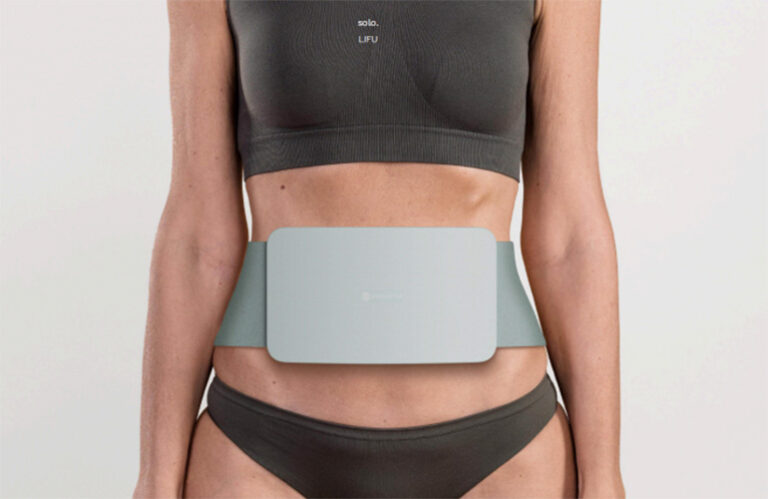
Researchers note that adapting the technology for clinical use would likely involve external wearable or table-mounted transducer arrays, similar to those used in ultrasound imaging but tuned to lower frequencies. Treatments could potentially be performed on an outpatient basis, making them accessible to patients who suffer from chronic symptoms of long COVID and other inflammatory syndromes.
Beyond long COVID, the potential scope of LIFU microclot therapy extends to several chronic and systemic conditions where amyloid fibrinogen microclots or microvascular blockages are implicated. These include fibromyalgia, postural orthostatic tachycardia syndrome (POTS), chronic fatigue syndrome (ME/CFS), and even neurodegenerative diseases such as Alzheimer’s, where reduced cerebral blood flow and inflammatory microclots have been observed.
The concept also fits within a broader movement in modern medicine toward noninvasive and energy-based therapies, where light, sound, or electromagnetic fields are used to restore normal physiological function without surgery or systemic drugs. LIFU sits at the intersection of this emerging field, offering a novel way to mechanically influence cellular and vascular processes from outside the body.
For Openwater, the company behind the Open-LIFU platform, this work represents a major milestone in demonstrating the versatility of focused ultrasound. Traditionally known for developing advanced imaging systems, Openwater has been expanding into therapeutic applications — exploring how ultrasound and optoacoustic technology can be used for blood-brain barrier opening, neuromodulation, and precision drug delivery.
“Ultrasound gives us the ability to interact with biology in a way that is both gentle and powerful,” said Openwater CEO Aaron Timm. “The results from this study reinforce that we can use these physical forces not only for imaging but also for healing. It’s about applying technology we already understand in smarter, more targeted ways.”
The implications for patients could be profound. If proven safe and effective, LIFU-based treatment could one day help restore blood flow, reduce inflammation, and improve organ function in those suffering from the lingering effects of long COVID — potentially transforming what has become one of the most complex post-viral syndromes of the modern era.
Moreover, by offering a therapy that does not rely on pharmaceuticals or invasive equipment, this approach could significantly reduce healthcare costs and accessibility barriers. Portable or wearable ultrasound devices could be developed for clinical or even home-based use under physician supervision, paving the way for personalized vascular therapies guided by real-time feedback.
While much work remains to be done, this study establishes a foundation for reimagining how focused ultrasound can be used therapeutically. The next phase of research will focus on translating these findings into safe human applications and identifying the most effective treatment protocols — including session duration, frequency calibration, and combination therapies with microbubbles or biological agents.
As clinical trials approach, the scientific community sees this as part of a larger shift: using energy-based medicine not just to visualize the body, but to directly intervene in disease processes. In this way, LIFU could become a cornerstone of a new generation of noninvasive vascular and neurological therapies — helping patients recover from conditions once thought to be untreatable.
Powered by Froala Editor