
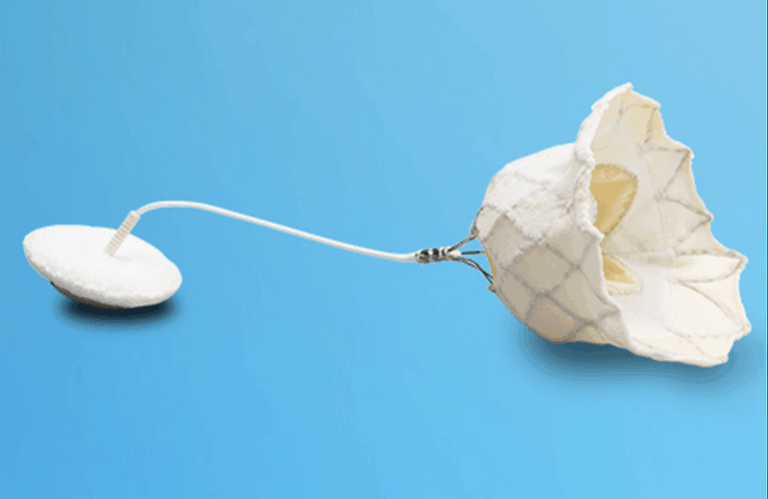

Abbott (NYSE: ABT) has reached a new milestone in its structural heart portfolio, announcing the first commercial implantation of its Tendyne transcatheter mitral valve replacement (TMVR) system in the United States. The news was shared publicly by Chris Waddell, Abbott’s U.S. vice president for transcatheter aortic valve implantation (TAVI), who posted the update on LinkedIn.
The procedure, performed at The Heart Hospital of Austin in Texas, marks the U.S. debut of the only FDA-approved TMVR system. It comes just months after the Tendyne system received its landmark FDA approval in May 2025. The successful procedure underscores Abbott’s leadership in transcatheter valve therapies and highlights the company’s ongoing mission to expand minimally invasive treatment options for patients with complex heart valve disease.
The milestone procedure involved a team of leading interventional cardiologists: Dr. Frank Zidar, Dr. Faraz Kerendi, Dr. John Moscona, and Dr. Stephen Dewan. Their collaboration represents the growing integration of cutting-edge technology into U.S. clinical practice.
“All of us at Abbott are excited to share that the first U.S. commercial implantation of Tendyne, the only FDA-approved transcatheter mitral valve replacement system, was completed today at The Heart Hospital of Austin, Texas,” Waddell wrote. “Congratulations to [the doctors] as well as the entire Structural Team at Heart Hospital of Austin on completing this very significant milestone.”
Why Tendyne matters
The mitral valve plays a vital role in maintaining unidirectional blood flow from the left atrium to the left ventricle. When the valve becomes diseased—either due to regurgitation (leakage) or stenosis (narrowing)—the heart’s ability to pump blood effectively is compromised. Traditionally, severe mitral valve disease has required open-heart surgery to repair or replace the valve.
However, many patients with severe mitral annular calcification (MAC) face limited treatment options. MAC occurs when the annulus—the ring-like structure supporting the mitral valve—becomes stiffened by calcium deposits. This condition complicates surgical repair and may make transcatheter repair devices, such as Abbott’s MitraClip, unsuitable.
For these high-risk patients, Tendyne provides a new alternative. Delivered through a minimally invasive transcatheter procedure, Tendyne is designed to replace the mitral valve without the need for open-heart surgery. This makes it particularly valuable for elderly or frail patients who cannot tolerate invasive procedures.
How Tendyne works
The Tendyne system consists of a self-expanding bioprosthetic valve that is delivered via catheter to the mitral annulus. Once in place, it replaces the diseased valve, immediately restoring function by eliminating regurgitation or relieving stenosis.
One of Tendyne’s unique features is its anchoring mechanism. The system uses an apical tether connected to a pad placed outside the heart, helping to secure the valve in position even in cases of severe calcification. This design makes Tendyne particularly effective in patients with complex mitral anatomy where other devices may fail.
The device has already demonstrated positive outcomes in international clinical studies, showing reductions in mitral regurgitation, improvements in functional capacity, and enhanced quality of life for patients. With FDA approval, the U.S. now joins Europe and other regions where Tendyne has already been in use under clinical and commercial settings.
Expanding Abbott’s structural heart portfolio
The commercial rollout of Tendyne strengthens Abbott’s position as a global leader in structural heart therapies. The company already dominates the transcatheter mitral repair market with its MitraClip device, widely recognized as the gold standard for patients with degenerative and functional mitral regurgitation.
But MitraClip is not suitable for all patients—particularly those with severe MAC or anatomy not amenable to repair. By offering Tendyne alongside MitraClip, Abbott can now cover a broader patient population, ensuring that more individuals have access to minimally invasive solutions.
This milestone also highlights the company’s dual-pronged mitral strategy:
Repair-first with MitraClip for patients whose valves can be preserved.
Replacement with Tendyne for patients where repair is not possible.
Together, these technologies position Abbott uniquely in the mitral space, where competitors such as Edwards Lifesciences are still advancing investigational TMVR systems.
Clinical significance
For patients with severe MAC and mitral valve disease, the arrival of Tendyne in the U.S. represents a breakthrough. Many in this population were previously deemed “no-option” patients, facing progressive heart failure and limited quality of life. Now, with Tendyne commercially available, interventional cardiologists can offer a therapy that addresses both regurgitation and stenosis while avoiding the risks of open-heart surgery.
Competitive landscape in transcatheter mitral valve replacement (TMVR)
Abbott’s commercial launch of Tendyne in the U.S. signals more than just a new device hitting the market—it marks a critical moment in the evolution of transcatheter mitral therapies. While transcatheter aortic valve implantation (TAVI) has already transformed treatment for aortic stenosis, the mitral valve space remains a frontier where multiple companies are racing to develop reliable solutions.
With the first U.S. commercial implantation now completed, Abbott has positioned itself as the clear leader in TMVR, setting the bar for competitors like Edwards Lifesciences, Medtronic, and smaller MedTech innovators still navigating the clinical trial phase.
Why mitral valve replacement is so challenging
The mitral valve is anatomically and functionally more complex than the aortic valve. Unlike the aortic valve, which is tricuspid and relatively symmetric, the mitral valve is asymmetric, saddle-shaped, and connected to chordae tendineae and papillary muscles. This complexity makes transcatheter replacement technically demanding, with risks of left ventricular outflow tract obstruction (LVOTO), malpositioning, and device migration.
For decades, mitral valve surgery has been the gold standard, but a significant subset of patients—particularly the elderly, frail, or those with severe mitral annular calcification (MAC)—are not candidates for surgery. Abbott’s Tendyne is the first FDA-approved system to directly address this group, filling a long-standing therapeutic gap.
Abbott’s dual-market advantage
Abbott already enjoys dominance in the transcatheter mitral repair market with its MitraClip system. MitraClip has treated more than 200,000 patients globally, with strong adoption in both degenerative and functional mitral regurgitation. However, MitraClip is not suitable for all patients, particularly those with heavily calcified annuli or combined regurgitation and stenosis.
By adding Tendyne to its portfolio, Abbott now controls both sides of the mitral treatment spectrum:
Repair with MitraClip when preservation is possible.
Replacement with Tendyne when repair is not feasible.
This positions Abbott uniquely against rivals, who are either focused solely on TMVR (like Edwards with its EVOQUE system) or still working through clinical hurdles in both repair and replacement.
Competitive players in TMVR
Several companies are pursuing TMVR solutions, but Abbott’s commercial lead gives it a significant advantage:
Edwards Lifesciences – Its EVOQUE TMVR system has shown promising trial results and is expected to seek U.S. regulatory approval in the coming years. Edwards already dominates TAVI with its Sapien line, and EVOQUE could be a strong competitor, but it remains investigational.
Medtronic – After halting its Intrepid TMVR trial in 2021, Medtronic has shifted focus but still has research programs in structural heart therapies.
Neovasc (acquired by Shockwave Medical) – More narrowly focused on refractory angina, but its structural expertise could fuel future mitral innovation.
Startups and niche players – Companies like HighLife, Cardiovalve, and Tioga Medical are advancing early-stage TMVR systems, though widespread commercialization remains years away.
With FDA approval and the first U.S. commercial implant complete, Abbott has a multi-year head start in building clinical experience, physician familiarity, and reimbursement frameworks for Tendyne.
Market growth potential
The global mitral valve disease market is projected to exceed $5 billion annually by 2030, driven by an aging population and improved detection of valve disease. In the U.S. alone, an estimated 4 million people have significant mitral regurgitation, yet only a fraction undergo treatment due to surgical risks and limited transcatheter options.
Tendyne’s entry into the U.S. market expands the treatable patient pool, particularly among those with severe MAC and no other viable therapies. This “previously untreatable” segment could become a high-growth market over the next five years.
Key adoption drivers
For Abbott, the success of Tendyne will depend on several factors:
Clinical data: Continued publication of real-world outcomes demonstrating safety, durability, and quality-of-life improvements.
Physician training: Ensuring that structural heart teams are equipped to perform technically demanding TMVR procedures.
Reimbursement pathways: Securing Medicare and private payer support to ensure broad patient access.
Portfolio synergy: Leveraging Abbott’s dominance with MitraClip to cross-sell Tendyne into centers already aligned with its mitral repair program.
Strategic implications
Abbott’s achievement gives it first-mover advantage in the TMVR market, much like Edwards enjoyed in TAVI a decade ago. The company now has the opportunity to set procedural standards, shape clinical guidelines, and influence hospital purchasing decisions.
If Abbott can scale adoption while maintaining strong safety outcomes, Tendyne could become a cornerstone therapy in structural cardiology, reinforcing Abbott’s position as a market leader and challenging competitors to catch up.
Powered by Froala Editor